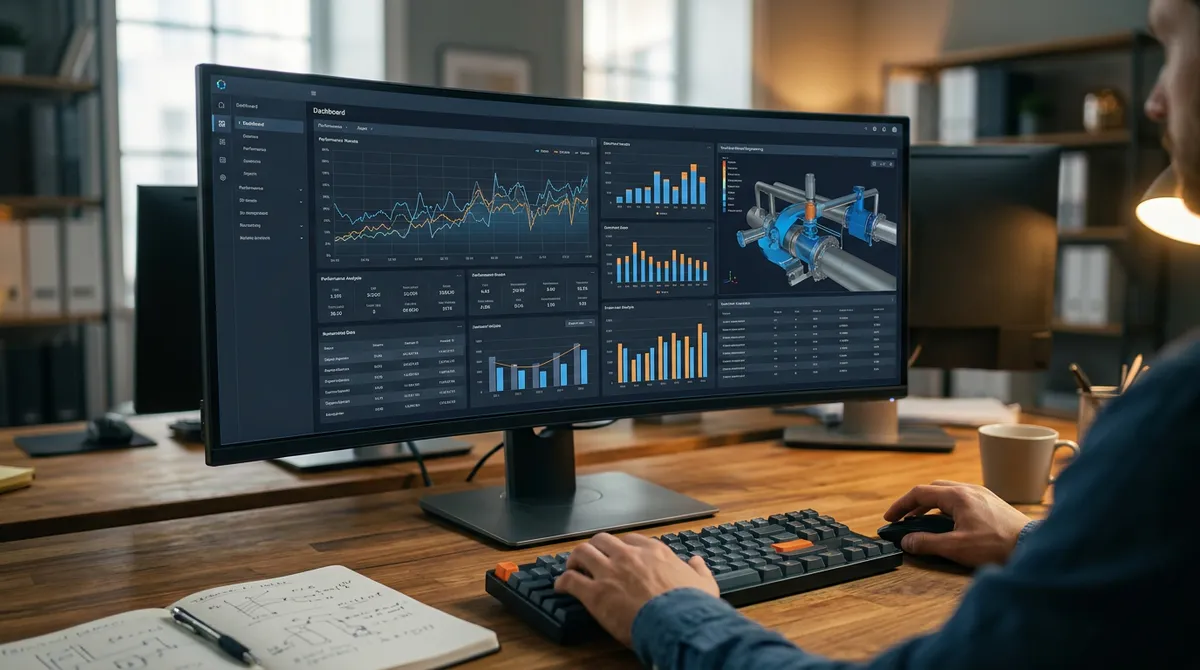
Subsea pipeline stability is a critical aspect of offshore pipeline design, directly impacting operational integrity and environmental safety. Engineers must rigorously assess how pipelines interact with the seabed under dynamic oceanographic conditions. This requires specialized tools capable of modeling complex hydrodynamic forces and pipe-soil interactions to ensure a pipeline remains stable throughout its design life. The PRCI Pipeline On-Bottom Stability software provides a focused approach to these challenges, integrating established research into a practical design and analysis tool.
Need This Software?
Contact us to request the software and receive download and access information.
This review examines PRCI Pipeline On-Bottom Stability, a dedicated software solution tailored for subsea pipeline lateral and vertical stability assessment. It explores the software’s core functionalities, its application of PRCI’s research and soil models, and its positioning within the broader landscape of offshore engineering software, offering insights for subsea pipeline stability engineers.
Key Facts
- Best for: Subsea Pipeline Stability Engineer
Understanding PRCI Pipeline On-Bottom Stability Software
PRCI Pipeline On-Bottom Stability is a dedicated software tool designed for engineers tasked with subsea pipeline lateral and vertical stability assessment. Developed by the Pipeline Research Council International (PRCI) and distributed by Technical Toolboxes, this software consolidates PRCI’s extensive research and advanced soil models into a single application. Its primary purpose is to enable detailed analysis of pipeline behavior on the seabed, accounting for various environmental loads and geotechnical factors.
Key Capabilities for Subsea Pipeline Stability Design
The software offers a suite of features engineered to address the core requirements of subsea pipeline stability. These capabilities empower engineers to perform comprehensive assessments and make informed design decisions.
Hydrodynamic Loading Analysis
A fundamental aspect of subsea stability is understanding the forces exerted by the marine environment. PRCI Pipeline On-Bottom Stability facilitates the modeling and assessment of wave and current hydrodynamic loading on pipelines. This includes evaluating oscillatory and steady-state forces that can induce pipeline movement.
Advanced Pipe-Soil Interaction Modeling
The interface between the pipeline and the seabed dictates its resistance to movement. The software incorporates sophisticated pipe-soil interaction modeling, allowing engineers to simulate how different soil conditions and pipeline configurations influence stability. This feature is crucial for accurately predicting breakout and resistance forces.
Absolute-Stability and Allowable-Movement Analysis
Engineers can perform both absolute-stability analysis, which determines if a pipeline will remain stationary under specific loads, and allowable-movement analysis. The latter is vital for scenarios where limited pipeline displacement is acceptable, helping to define design envelopes and operational limits.
Stability-Design Sensitivity Studies
To optimize pipeline designs and understand critical parameters, the software supports stability-design sensitivity studies. This allows engineers to investigate the impact of variations in environmental conditions, pipeline properties, or soil characteristics on overall stability, aiding in robust and economical design choices.
Why PRCI Pipeline On-Bottom Stability Stands Apart
What differentiates PRCI Pipeline On-Bottom Stability from other tools in the market is its direct integration of PRCI’s specialized subsea on-bottom stability research and proprietary soil models. While general offshore structural simulators may offer broader analysis capabilities, PRCI OBS provides a highly focused and specialized solution specifically tailored for pipeline on-bottom stability. This narrow focus ensures that the underlying models and methodologies are directly applicable and validated for the specific challenges of pipeline interaction with the seabed, providing a targeted approach that leverages decades of industry-specific research.
Comparing Subsea Pipeline Analysis Tools
Understanding the landscape of subsea engineering software helps in selecting the right tool for specific project needs. PRCI Pipeline On-Bottom Stability serves a distinct function within this ecosystem.
| Software Name | Category | Primary Focus / Distinction |
|---|---|---|
| PRCI Pipeline On-Bottom Stability | Subsea Pipeline Stability | Dedicated tool for lateral and vertical stability, incorporating PRCI’s specialized research and soil models. |
| DNV Sesam | Offshore Structural Analysis | General suite for offshore structural analysis, including hydrodynamics and mooring. |
| OrcaFlex | Offshore Structural Simulation | Dynamic analysis of offshore systems including risers, moorings, and subsea pipelines. |
| OFFPIPE | Offshore Structural Simulation | Analysis of pipelines during installation (lay, buckle) and in-place static/dynamic behavior. |
The focused nature of PRCI Pipeline On-Bottom Stability means it excels in detailed stability assessment, complementing broader simulation tools that cover a wider range of offshore structural behaviors.
Frequently Asked Questions About PRCI Pipeline On-Bottom Stability
What types of hydrodynamic forces can be analyzed by PRCI Pipeline On-Bottom Stability?
The software can analyze wave and current hydrodynamic loading on pipelines, assessing both oscillatory and steady-state forces.
How does the software model different pipe-soil interaction scenarios?
PRCI Pipeline On-Bottom Stability incorporates sophisticated pipe-soil interaction modeling to simulate how various soil conditions and pipeline configurations affect stability, which is essential for predicting breakout and resistance forces.
Can PRCI Pipeline On-Bottom Stability be used for both lateral and vertical stability assessments?
Yes, the software is specifically designed for comprehensive subsea pipeline lateral and vertical stability assessments.
What kind of sensitivity studies can be performed using this software?
The software supports stability-design sensitivity studies, allowing engineers to investigate the impact of variations in environmental conditions, pipeline properties, or soil characteristics on overall pipeline stability.
Is PRCI Pipeline On-Bottom Stability suitable for deepwater subsea pipeline projects?
The software is designed for general subsea pipeline stability assessment, encompassing pipeline behavior on the seabed under various environmental and geotechnical factors. The provided information does not specify limitations or explicit features tailored solely for deepwater applications, though its core stability principles are broadly applicable to subsea environments.
Need Access to This Software?
Need this software for your project? Contact us for download access, availability, and related information.
Conclusion
PRCI Pipeline On-Bottom Stability is a specialized and highly focused tool that is particularly well-suited for Subsea Pipeline Stability Engineers requiring detailed analysis of pipeline interaction with the seabed. Its strength lies in the direct application of PRCI’s validated research and proprietary soil models, offering a precise approach to lateral and vertical stability assessments under complex hydrodynamic and geotechnical conditions. To explore how PRCI Pipeline On-Bottom Stability can enhance your subsea pipeline design workflows, submit an inquiry through petroleumsoftware.ir.
Source: Learn more directly from the official PRCI product page.