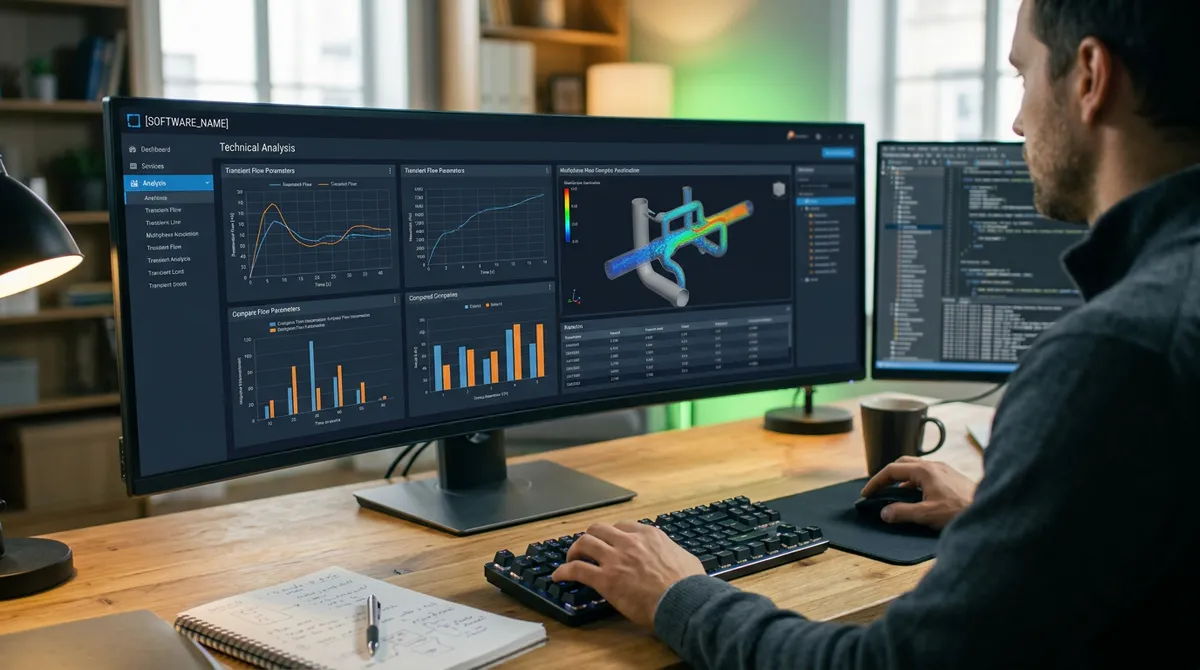
Flow assurance is critical for the safe and efficient operation of oil and gas production systems, especially in multiphase flow environments. Engineers in this domain rely on specialized simulation software to predict and manage complex fluid behaviors within wells and pipelines. KONGSBERG LedaFlow is one such solution, designed to address the intricate challenges of transient multiphase flow.
Need This Software?
Contact us to request the software and receive download and access information.
This article provides a technical overview of LedaFlow’s capabilities, focusing on its utility for Flow Assurance Engineers and Multiphase Flow Specialists in analyzing dynamic system conditions, predicting flow phenomena, and mitigating operational risks from reservoir to processing facilities.
Key Facts
- Category: Pipeline Engineering & Flow Assurance
- Best for: Flow Assurance Engineer / Multiphase Flow Specialist
- Also compare: SLB Olga, Aspen METTE, SLB Pipesim
Understanding KONGSBERG LedaFlow for Flow Assurance
KONGSBERG LedaFlow is a transient multiphase flow simulator developed to provide high-fidelity analysis for well and pipeline systems. It offers engineers a tool for detailed prediction of various flow phenomena, which is essential for optimizing design, troubleshooting operational issues, and ensuring system integrity. The software’s focus on first-principles physics allows for a deep understanding of fluid dynamics under different operating conditions.
Core Capabilities for Multiphase Systems
LedaFlow provides a suite of capabilities tailored for complex multiphase flow assurance challenges:
- Transient Multiphase Well and Pipeline Simulation: Enables dynamic analysis of fluid behavior from reservoir to processing facilities, accounting for changes over time.
- High-Resolution Slug Capturing: Offers advanced algorithms for accurately modeling and predicting slug formation, growth, and transport, which is crucial for mitigating operational risks.
- Hydrate and Wax Formation/Transport Modeling: Simulates the conditions under which solid deposits like hydrates and wax can form and how they are transported, allowing for effective prevention and mitigation strategies.
- CO2-with-Impurities and Hydrogen Transport: Supports specialized simulations for the transport of CO2, including various impurities, and hydrogen, addressing the unique requirements of carbon capture, utilization, and storage (CCUS) projects and the emerging hydrogen economy.
Operational Scenario Analysis
Beyond steady-state analysis, KONGSBERG LedaFlow facilitates the simulation of various transient operational scenarios that are common in field operations:
- Startup, Shutdown, and Restart: Models the dynamic changes and potential issues associated with initiating, ceasing, and resuming production.
- Pigging Scenarios: Simulates the impact of pigging operations on pipeline flow, pressure, and slug characteristics, aiding in optimal pigging strategy development.
Underlying Principles and Integration
What sets LedaFlow apart in the realm of flow assurance software is its emphasis on fundamental physics and its architectural approach:
- First-Principles Multiphase Physics: The software is built on advanced mechanistic models that directly solve the underlying physical equations of multiphase flow, rather than relying solely on empirical correlations. This approach contributes to greater accuracy and predictive power across a wider range of conditions.
- Mechanistic Deposit Transport: For issues like hydrate and wax, LedaFlow uses mechanistic models to describe how these deposits form and move within the system, offering a more realistic representation than simplified approaches.
- Open Integration Architecture: LedaFlow is designed with an open architecture, allowing for flexible integration with other engineering tools and workflows, enhancing its utility within broader simulation environments.
KONGSBERG LedaFlow Compared to Other Flow Assurance Tools
In the competitive landscape of flow assurance software, LedaFlow positions itself as a specialized alternative, particularly when high-fidelity slug capture and mechanistic deposit modeling are paramount. Its focus on detailed physics provides a distinct approach compared to more generalized tools.
| Product Category | Related/Competing Product |
|---|---|
| Pipeline Engineering & Flow Assurance | SLB Olga |
| Pipeline Engineering & Flow Assurance | Aspen METTE |
| Pipeline Engineering & Flow Assurance | SLB Pipesim |
About the Vendor
The development and commercialization of LedaFlow are managed by Falkor AS, a company operating under the ownership of the KONGSBERG group. This ensures ongoing development and support for the software, maintaining its position as a robust tool for flow assurance challenges.
Frequently Asked Questions About KONGSBERG LedaFlow
What are the primary applications of KONGSBERG LedaFlow in pipeline engineering?
KONGSBERG LedaFlow is primarily applied for detailed prediction of various transient multiphase flow phenomena in well and pipeline systems. This includes optimizing design, troubleshooting operational issues, ensuring system integrity, and supporting specialized simulations for CO2 with impurities and hydrogen transport.
How does LedaFlow’s high-resolution slug capturing benefit flow assurance studies?
LedaFlow’s high-resolution slug capturing capabilities enable accurate modeling and prediction of slug formation, growth, and transport within pipelines. This is crucial for mitigating operational risks associated with slugging, such as unstable flow, equipment damage, and production upsets.
Can KONGSBERG LedaFlow simulate the transport of non-hydrocarbon fluids like CO2 and hydrogen?
Yes, LedaFlow supports specialized simulations for the transport of CO2, including various impurities, and hydrogen. This addresses the unique requirements of carbon capture, utilization, and storage (CCUS) projects and the emerging hydrogen economy.
What types of operational scenarios can be analyzed using LedaFlow?
LedaFlow facilitates the simulation of various transient operational scenarios. These include startup, shutdown, and restart procedures, as well as pigging operations to assess their impact on pipeline flow, pressure, and slug characteristics.
How does LedaFlow’s open integration architecture support broader engineering workflows?
LedaFlow’s open integration architecture allows for flexible integration with other engineering tools and workflows. This enhances its utility within broader simulation environments, enabling engineers to incorporate LedaFlow’s high-fidelity results into comprehensive project analyses.
Need Access to This Software?
Need this software for your project? Contact us for download access, availability, and related information.
Conclusion
For Flow Assurance Engineers and Multiphase Flow Specialists grappling with complex transient flow behaviors, slug management, and deposit formation in wells and pipelines, KONGSBERG LedaFlow offers a robust, physics-driven simulation environment. Its specialized capabilities for high-resolution slug capture, mechanistic deposit modeling, and tailored fluid transport analyses make it a valuable asset for ensuring operational efficiency and integrity. To explore how KONGSBERG LedaFlow can address your specific flow assurance needs, submit an inquiry through the petroleumsoftware.ir request form.
Source: Learn more directly from the official Kongsberg Digital product page.