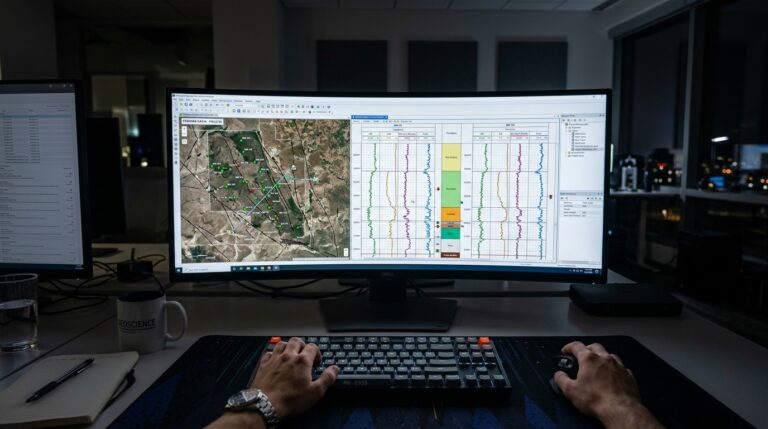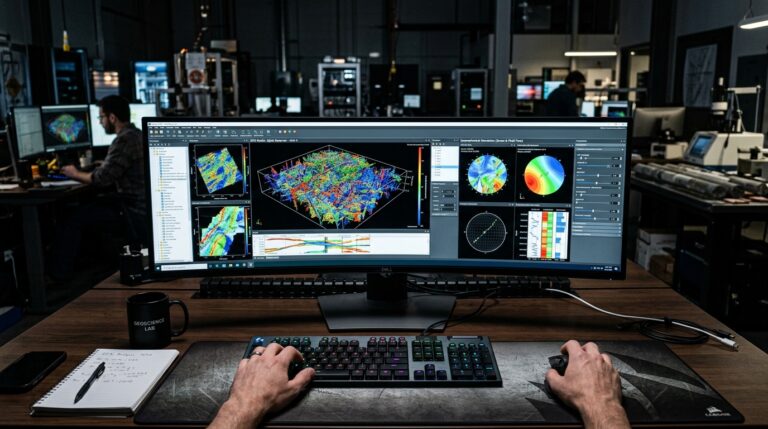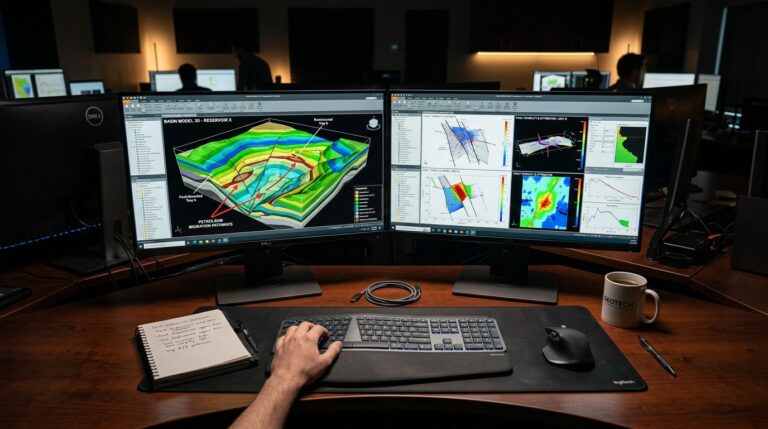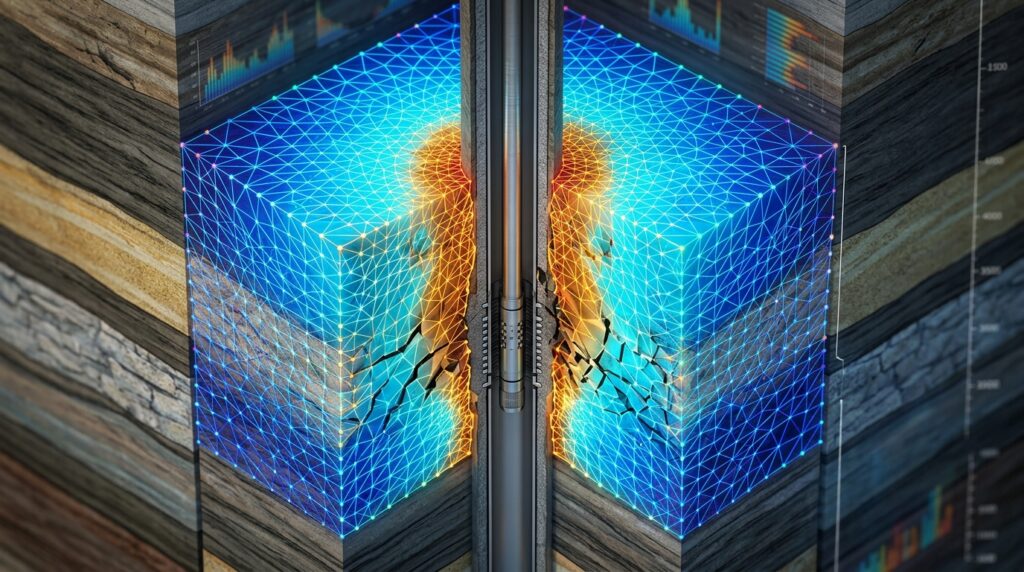
Understanding and mitigating geomechanical risks is paramount for successful and cost-effective well operations. For Drilling Engineers and Geomechanics Specialists, selecting the right software tool can significantly impact the safety, efficiency, and productivity of drilling, completion, and production activities.
Need This Software?
Contact us to request the software and receive download and access information.
This article provides an in-depth look at Weatherford STABView, a specialized software package designed to address near-wellbore geomechanical challenges. It details the software’s capabilities, its underlying methodology, and how it assists professionals in optimizing well planning across various geological settings.
Key Facts
- Category: Geomechanics Software
- Best for: Drilling Engineer / Geomechanics Specialist
- Also compare: Schlumberger Visage, JewelSuite GeoMechanics
Introduction to Weatherford STABView for Geomechanical Well Planning
Weatherford STABView is a commercial well-planning package specifically developed to analyze critical near-wellbore geomechanical behavior. The software integrates cutting-edge research from universities and oil & gas research organizations, providing a robust solution for a decade of development in addressing complex subsurface conditions.
Its primary objective is to equip engineers with the tools needed to predict and manage risks associated with wellbore stability, ensuring optimal operational parameters from drilling through production. The software’s capabilities are rooted in efficiently solving fundamental equations governing near-wellbore mechanical behavior, making it a valuable asset for detailed well-specific analysis.
Core Capabilities: Addressing Wellbore Stability and Production Risks
Weatherford STABView provides a comprehensive framework for assessing and mitigating key geomechanical risks. This allows drilling and completion personnel to make informed decisions throughout the well lifecycle.
Comprehensive Risk Analysis Framework
The software is engineered to analyze four distinct categories of risk, providing a holistic view of potential wellbore challenges:
- Wellbore instability: Identifying conditions that can lead to borehole collapse or excessive deformation.
- Lost circulation and fracturing: Predicting scenarios where drilling fluids may be lost into the formation, or where induced fracturing could occur.
- Sand production: Assessing the likelihood of sand influx into the wellbore, which can impact production and equipment.
- Fault/fracture/bedding-plane slip: Analyzing the potential for movement along geological discontinuities near the wellbore, which can affect well integrity.
Optimizing the Bottomhole Pressure Window
A crucial function of STABView is its ability to help optimize the bottomhole pressure window. This is vital for all phases of a well’s life:
- Drilling: Ensuring safe and efficient drilling by maintaining pressure within safe limits.
- Completion: Designing completion strategies that account for formation stability.
- Stimulation: Planning stimulation treatments without compromising wellbore integrity.
- Production: Managing reservoir depletion effects and their impact on well stability.
This optimization is applicable to vertical, deviated, and horizontal wells, accommodating a wide range of geological settings encountered in oil and gas operations.
Advanced Modeling and Calibration
To provide realistic and accurate analyses, Weatherford STABView allows models to be calibrated to offset-well observations. This ensures that simulations are grounded in actual subsurface data. The models incorporate critical environmental factors:
- Pore pressure
- Temperature
- Chemical effects
By integrating these parameters, the software can simulate realistic rock behavior, leading to more reliable predictions and better-informed well designs.
Technical Foundations and Interoperability
The software leverages efficient, rapidly-converging algorithms to solve the fundamental equations governing near-wellbore mechanical behavior. This technical foundation ensures that analyses are performed quickly and accurately. Furthermore, STABView offers import/export compatibility with other programs, facilitating integration into existing engineering workflows and data management systems.
Weatherford STABView vs. Other Geomechanics Software
In the domain of drilling engineering and wellbore geomechanics, various software solutions exist, each with a distinct scope. Weatherford STABView distinguishes itself by focusing specifically on near-wellbore, well-planning-focused stability analysis. This targeted approach is ideal for engineers who require detailed insights into the immediate vicinity of the borehole.
The table below provides a high-level comparison to illustrate STABView‘s position relative to other tools in the category:
| Product | Primary Focus / Scope |
|---|---|
| Weatherford STABView | Near-wellbore, well-planning-focused stability tool (single/multi-well analysis of instability, lost circulation, sand production, slip risk) |
| Schlumberger Visage | Full 3D/4D field-scale finite-element geomechanics simulator |
| JewelSuite GeoMechanics | Geomechanics software |
Enhancing Workflow with STABView Training
To maximize the utility of Weatherford STABView, dedicated training resources are available. These include in-house training courses specifically on rock mechanics, wellbore stability, and sand production, tailored for drilling and completion personnel. Additionally, a specialized one-day STABView workshop focuses on practical case histories, enabling users to apply the software effectively to real-world challenges.
FAQ
What types of wellbore risks does Weatherford STABView analyze?
Weatherford STABView analyzes wellbore instability, lost circulation and fracturing, sand production, and fault/fracture/bedding-plane slip risks.
How does STABView assist in optimizing the bottomhole pressure window?
STABView helps optimize the bottomhole pressure window for drilling, completion, stimulation, and production phases by identifying safe pressure limits for vertical, deviated, and horizontal wells.
Can STABView models be calibrated with real-world well data?
Yes, STABView models can be calibrated to offset-well observations, incorporating pore pressure, temperature, and chemical effects to provide realistic analyses.
What is the primary difference between Weatherford STABView and field-scale geomechanics simulators?
Weatherford STABView focuses specifically on near-wellbore, well-planning-focused stability analysis, whereas field-scale simulators like Schlumberger Visage provide full 3D/4D field-scale finite-element geomechanics simulation.
Are training resources available for Weatherford STABView users?
Yes, training resources include in-house courses on rock mechanics, wellbore stability, and sand production, as well as a specialized one-day STABView workshop focusing on practical case histories.
Need Access to This Software?
Need this software for your project? Contact us for download access, availability, and related information.
Conclusion
Weatherford STABView is designed for Drilling Engineers and Geomechanics Specialists requiring precise, near-wellbore geomechanical analysis to mitigate risks in well planning and operations. Its focused capabilities in predicting wellbore instability, lost circulation, sand production, and fault slip, combined with bottomhole pressure optimization, make it suitable for detailed, well-specific applications across various well types and geological contexts. To explore how Weatherford STABView can enhance your specific well planning and geomechanics workflows, submit an inquiry through the petroleumsoftware.ir request form.