Reservoir simulation forms the backbone of modern petroleum engineering, providing critical insights into subsurface fluid flow and production forecasting. For Reservoir Engineers and Simulation Specialists, selecting the right software is paramount for managing complex models and optimizing field development strategies.
Need This Software?
Contact us to request the software and receive download and access information.
This article details the capabilities of RFD tNavigator, a simulation platform designed to integrate various aspects of the E&P workflow within a single environment, focusing on its unified approach and high-performance computing capabilities.
Key Facts
- Category: Reservoir Engineering, Simulation & EOR
- Best for: Reservoir Engineers / Simulation Specialists involved in complex reservoir modeling, simulation, and enhanced oil recovery (EOR) projects.
- Also compare: Schlumberger Eclipse, CMG + CoFlow, Emerson Tempest
Understanding RFD tNavigator: An Integrated Approach to Reservoir Simulation
RFD tNavigator is a comprehensive simulation solution developed by Rock Flow Dynamics (RFD). It is engineered to address the demanding computational needs of reservoir modeling by providing a unified environment that spans multiple petroleum engineering disciplines. This integration aims to streamline workflows and minimize data transfer issues that can arise when using disparate software tools.
Core Capabilities and Features
RFD tNavigator offers a robust set of features tailored for advanced reservoir engineering:
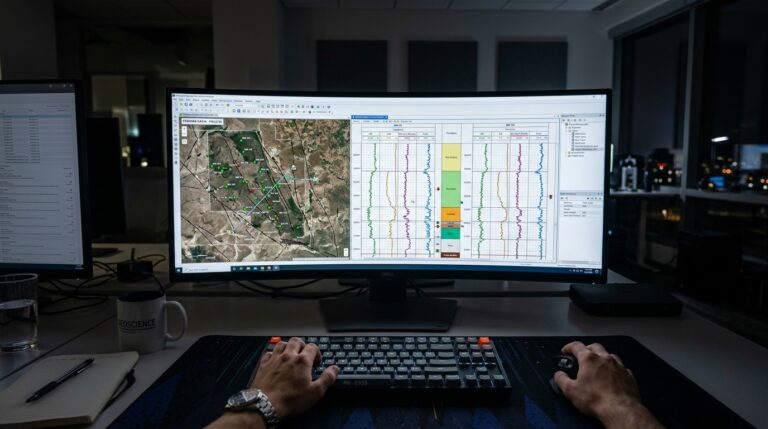
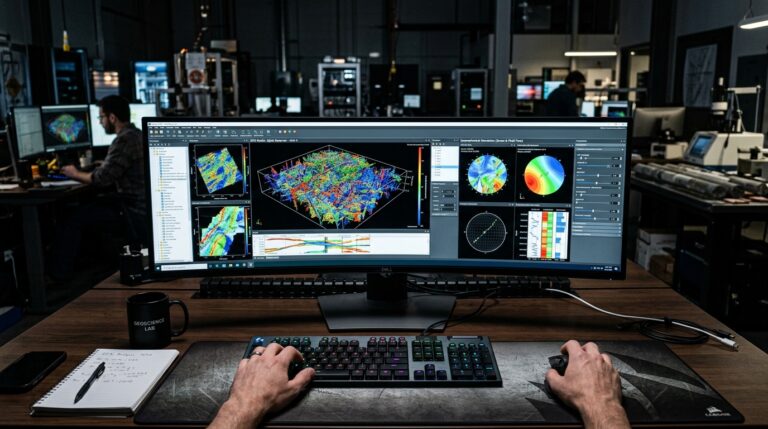
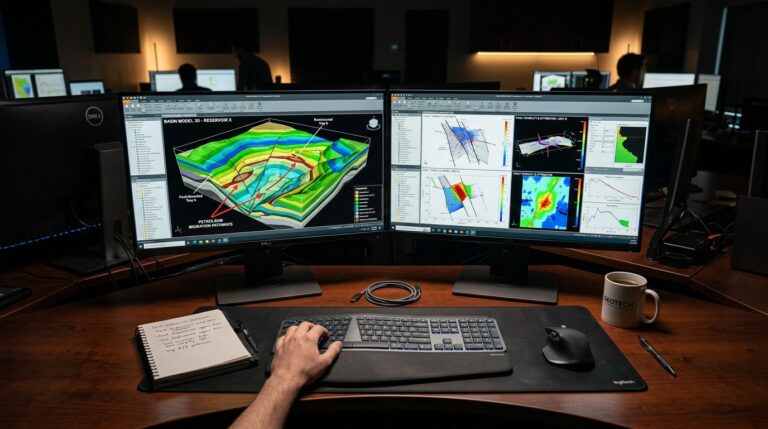
- Unified Environment: It provides a single platform that consolidates workflows across seismic, geology, geomechanics, reservoir engineering, PVT, wellbore, and surface-network modeling, reducing the need for inter-application data hand-offs.
- Fully-Coupled Simulation: The software supports fully-coupled, fully-implicit simulation of both reservoir and surface-network systems, allowing for a more accurate representation of fluid dynamics from the reservoir to the surface facilities.
- Versatile Simulation Types: RFD tNavigator can perform black-oil, compositional, and thermal simulations. This versatility supports a wide range of model types, including conventional and unconventional, onshore and offshore reservoirs, regardless of their size or complexity.
- High-Performance Computing (HPC) Support: Developed as a multiplatform C++/CUDA application, it is designed to run efficiently on various hardware configurations, from laptops and workstations to large-scale HPC clusters, with or without GPUs.
- Cloud Computing Option: For enhanced flexibility and scalability, the software includes an on-demand Microsoft Azure cloud option, billed per second, providing access to extensive computational resources without significant upfront hardware investment.
Differentiating Features and Performance
A key differentiator for RFD tNavigator in the market is its integrated workflow and native hardware acceleration. Unlike traditional approaches that may require separate applications for geomodeling, reservoir simulation, and surface-network analysis, tNavigator combines these into one cohesive environment. This design aims to mitigate data loss and improve efficiency throughout the simulation process.
The platform’s native GPU/CUDA acceleration is another significant aspect, leveraging parallel processing capabilities to speed up complex calculations. This focus on performance and scalability has been independently profiled by organizations such as the HPC Advisory Council, in collaboration with industry partners like Intel, Dell, and Mellanox, through published benchmarking studies.
RFD tNavigator in the E&P Workflow
The integrated nature of RFD tNavigator is designed to support a holistic view of the E&P lifecycle. By encompassing seismic interpretation data, geological models, geomechanical considerations, PVT analysis, detailed wellbore modeling, and comprehensive surface network configurations within a single environment, reservoir engineers can analyze the entire production system more cohesively. This integration facilitates informed decision-making across various stages of field development and production optimization.
Comparative Overview: RFD tNavigator and Competing Products
The reservoir simulation software market offers several powerful tools, each with distinct strengths. Understanding these differences can help professionals select the most appropriate solution for their specific operational needs.
| Product | Category | Key Differentiator (vs. RFD tNavigator) |
|---|---|---|
| RFD tNavigator | Reservoir Engineering, Simulation & EOR | Single unified environment for geoscience to surface-network modeling with native GPU/CUDA acceleration. |
| Schlumberger Eclipse | Reservoir Engineering, Simulation & EOR | Often requires separate applications and data hand-offs for geomodeling, reservoir simulation, and surface-network analysis. |
| CMG + CoFlow | Reservoir Engineering, Simulation & EOR | Often requires separate applications and data hand-offs for geomodeling, reservoir simulation, and surface-network analysis, despite offering coupled flow solutions. |
| Emerson Tempest | Reservoir Engineering, Simulation & EOR | Offers a suite of tools that typically involve distinct modules for different aspects of the simulation workflow. |
FAQ
What types of reservoirs can RFD tNavigator simulate?
RFD tNavigator supports black-oil, compositional, and thermal simulations, allowing it to model a wide array of reservoir types, including conventional, unconventional, onshore, and offshore, regardless of their size or inherent complexity.
How does the software handle complex surface networks in conjunction with reservoir models?
The software is designed for fully-coupled, fully-implicit simulation of both reservoir and surface-network systems. This capability enables a more accurate and integrated representation of fluid dynamics from the subsurface reservoir to the surface production facilities.
What are the primary benefits of RFD tNavigator’s native GPU/CUDA acceleration?
Native GPU/CUDA acceleration leverages parallel processing, significantly speeding up complex calculations in reservoir simulation. This focus on performance and scalability has been independently verified through benchmarking studies by organizations like the HPC Advisory Council.
Can RFD tNavigator integrate geological and geophysical data directly into the simulation workflow?
Yes, RFD tNavigator provides a unified platform that consolidates workflows across seismic, geology, geomechanics, reservoir engineering, PVT, wellbore, and surface-network modeling, thereby minimizing the need for inter-application data transfers.
What deployment options are available for running RFD tNavigator simulations?
RFD tNavigator is a multiplatform C++/CUDA application, capable of running efficiently on diverse hardware configurations from individual laptops and workstations to large-scale HPC clusters, with or without GPUs. It also offers an on-demand Microsoft Azure cloud option, billed per second, for scalable computational resources.
Need Access to This Software?
Need this software for your project? Contact us for download access, availability, and related information.
Conclusion
RFD tNavigator provides reservoir engineers with a robust platform for integrated simulation, offering advanced capabilities for complex reservoir and surface-network modeling. Its unified environment and performance optimization features are designed to enhance efficiency and accuracy in subsurface analysis for professionals involved in challenging reservoir engineering and EOR projects. To determine if RFD tNavigator aligns with your specific reservoir engineering and simulation needs, submit an inquiry through the petroleumsoftware.ir request form to connect with an expert.
Source: Source
Hello, is the full license for RFD tNavigator: Integrated Geoscience and Reservoir Simulation available for download? How can I submit a request?