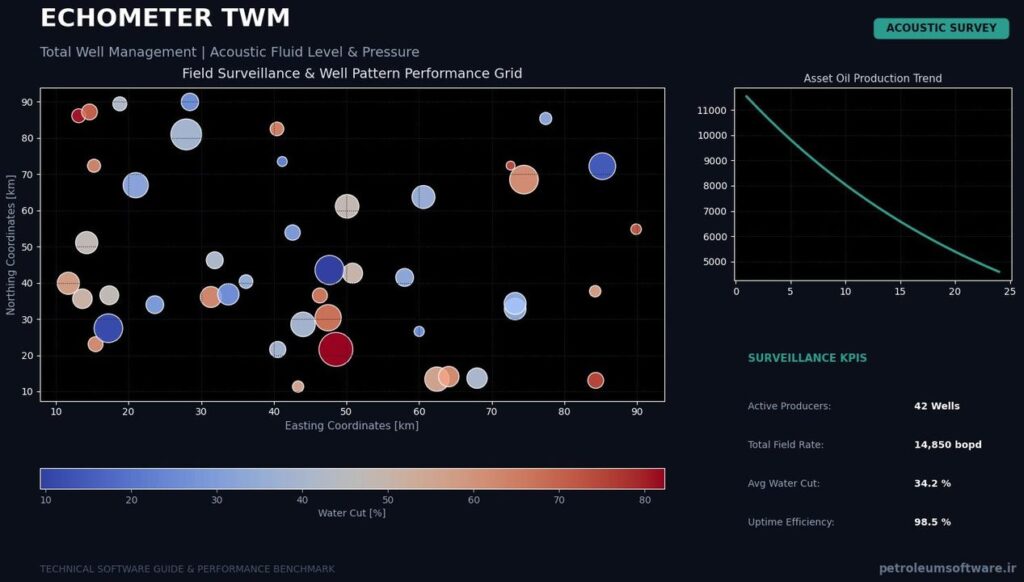
In the domain of well testing and production analysis, managing historical data is as crucial as acquiring new insights. Echometer TWM (Total Well Management) represents a significant platform in the history of well performance diagnostics, serving as a key predecessor in the Echometer product line. This article provides a comprehensive overview of Echometer TWM, detailing its original capabilities and its contemporary role primarily as a source of valuable legacy data for modern analysis platforms like Echometer TAM.
Need This Software?
Contact us to request the software and receive download and access information.
Key Facts
- Category: Well-Data Acquisition & Analysis Software
- Best for: Production Engineer / Well Test Analyst
- Also compare: Echometer TAM
What is Echometer TWM Software?
Echometer TWM is a well-data acquisition and analysis software originally designed to integrate with earlier Echometer Well Analyzer hardware. It established a fundamental framework for capturing and interpreting critical well performance metrics. Its design focused on providing engineers with the tools needed to understand downhole conditions and optimize production strategies based on direct measurements.
Key Capabilities of Echometer TWM
The core functionality of Echometer TWM revolved around its ability to process and structure specific types of well data. Its key capabilities include:
- Acoustic Liquid-Level Data Acquisition: TWM was instrumental in recording and analyzing acoustic liquid-level measurements, which are vital for determining fluid levels in wells and assessing pump performance in artificial lift systems.
- Well-Performance Data Structure: The software provided a robust data structure for organizing comprehensive well-performance information. This structure enabled detailed analysis of various parameters influencing well productivity and operational efficiency.
Understanding TWM’s Role in Modern Workflows
While Echometer TWM was a cornerstone for well testing and production analysis, its primary role today is as a legacy data format and predecessor system. For new deployments and advanced analysis, Echometer’s next-generation solution, TAM, is positioned as the recommended successor. A critical aspect of TWM’s ongoing utility is its data format. The Echometer TAM software is designed with the capability to directly import TWM-format data files, ensuring continuity and allowing engineers to leverage historical TWM datasets within an updated analytical environment.
Echometer TWM’s enduring value lies in its structured well data, which remains accessible and analyzable through modern platforms like Echometer TAM, preserving historical insights for contemporary production optimization efforts.
Echometer TWM vs. Echometer TAM: A Comparison
Understanding the distinction between Echometer TWM and Echometer TAM is crucial for petroleum engineers evaluating their software needs. The table below highlights their key differences:
| Aspect | Echometer TWM | Echometer TAM |
|---|---|---|
| Primary Role | Original well-data acquisition and analysis software; predecessor system. | Next-generation well-data acquisition, analysis, and management software. |
| Data Acquisition | Used with earlier Echometer Well Analyzer hardware. | Supports current generation Echometer Well Analyzer hardware and advanced data acquisition. |
| Data Analysis | Provided foundational acoustic liquid-level and well-performance data analysis. | Offers expanded and enhanced analysis capabilities, building upon TWM’s data structure. |
| Current Recommendation | Primarily for managing legacy data and historical records. | Recommended current tool for new deployments and comprehensive well management. |
| Data Interoperability | Its data format is importable by Echometer TAM. | Can import and extend data from TWM-format files. |
Who is Echometer TWM for?
Echometer TWM is particularly relevant for:
- Engineers managing existing legacy data: Professionals with archives of well performance data originally collected and stored in the TWM format.
- Well test analysts maintaining historical records: Those needing to access or integrate past well data into current analytical workflows through compatible successor platforms.
Why Consider Data from TWM for Your Analysis?
Even as a predecessor system, the data generated by Echometer TWM holds significant value. It provides a rich historical context for well behavior, production trends, and the performance of artificial lift systems over time. Accessing and analyzing this data, especially through modern platforms like Echometer TAM that support TWM file imports, allows engineers to:
- Trace long-term production changes.
- Evaluate the effectiveness of past interventions.
- Calibrate and validate predictive models using empirical historical data.
Frequently Asked Questions About Echometer TWM
What is the primary function of Echometer TWM in well analysis?
Echometer TWM primarily serves as a well-data acquisition and analysis software, designed to integrate with earlier Echometer Well Analyzer hardware. Its function involved capturing and interpreting critical well performance metrics, establishing a framework for understanding downhole conditions and optimizing production.
How does Echometer TWM handle acoustic liquid-level measurements?
Echometer TWM was instrumental in recording and analyzing acoustic liquid-level measurements. These measurements are vital for determining fluid levels in wells and assessing pump performance, particularly in artificial lift systems.
Can data from Echometer TWM be used with other software?
Yes, data stored in the Echometer TWM format can be directly imported into Echometer TAM software. This ensures continuity and allows engineers to leverage historical TWM datasets within an updated analytical environment.
What types of well performance data does Echometer TWM structure?
Echometer TWM provided a robust data structure for organizing comprehensive well-performance information. This includes acoustic liquid-level data and various other parameters influencing well productivity and operational efficiency.
Why is understanding Echometer TWM relevant for production engineers today?
Understanding Echometer TWM is relevant for production engineers today primarily because of its legacy data. The structured well data it generated remains accessible and valuable for tracing long-term production changes, evaluating past interventions, and validating predictive models using empirical historical data, especially when imported into modern platforms like Echometer TAM.
Need Access to This Software?
Need this software for your project? Contact us for download access, availability, and related information.
Conclusion
Echometer TWM is best suited for production engineers and well test analysts who need to manage, access, and integrate historical well performance data collected and stored in its original format. Its enduring value lies in the structured well data it created, which remains fully compatible and analyzable through its successor, Echometer TAM, providing essential historical context for current production optimization efforts. To understand how Echometer TWM data can integrate with modern well analysis platforms, or for more specific technical inquiries, please submit an inquiry through petroleumsoftware.ir.